

Last Updated on September 6, 2025 by Larious
There are various types of attacks that we are exposed to at the moment, among which we can highlight the well-known and most used attack, phishing attacks.
Now, here is the main question: can we protect ourselves from these attacks? The answer is yes, as we can use different methods to avoid these attacks on our mobile devices.
Table of Contents
Phishing in voice calls

Phishing attempts based on voice calls, also known as “vishing”, are more direct than SMS since these attackers have the latest technologies, such as caller ID, remote automatic dialers, numbers based on area codes, or access to our personal information.
That’s why we should always be careful with this type of call since legitimate companies will never ask you for private data over the phone, just as they would not do it through email.
Phishing attack through messages (SMS)

The use of SMS has existed for years, and its functionality hasn’t changed much, as it focuses on capturing the victim’s attention with lucrative incentives.
In this, the attackers hunt for bank account and credit card data and access credentials to platforms, cryptocurrencies, or PayPal accounts, among other things. And then, this information can be sold for a good profit on the Dark Web.
The best we can do to avoid this is not to click on any link that forces us to act in a hurry.
Phishing by phone number

These attacks by phone numbers are among the popular phishing scams and focus on the security system of bank accounts with two-factor authentication.
The attackers collect personal information such as phone numbers, date of birth, etc., to transfer our SIM to another company and receive the bank details, which is considered financial fraud.
As the process of change takes several hours or days, if we notice that the phone can not perform basic functions such as calling or sending SMS, we could find ourselves in one of these cases, so it would be convenient to contact the corresponding operator to avoid this type of attack.
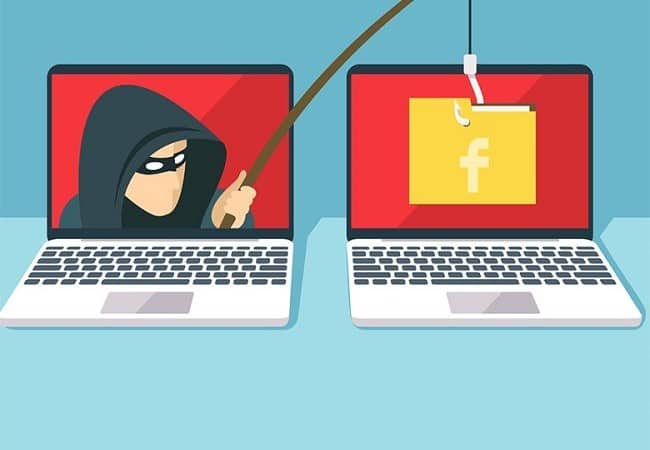
In these attacks, attackers can pose as celebrities, friends, or family to deceive us. Hence, whether it is a trustworthy contact or not, we must remain alert and never share our data or information through social networks with other contacts in any situation.
So, what do you think about this safety tutorial? Share all your views and thoughts in the comment section below.

